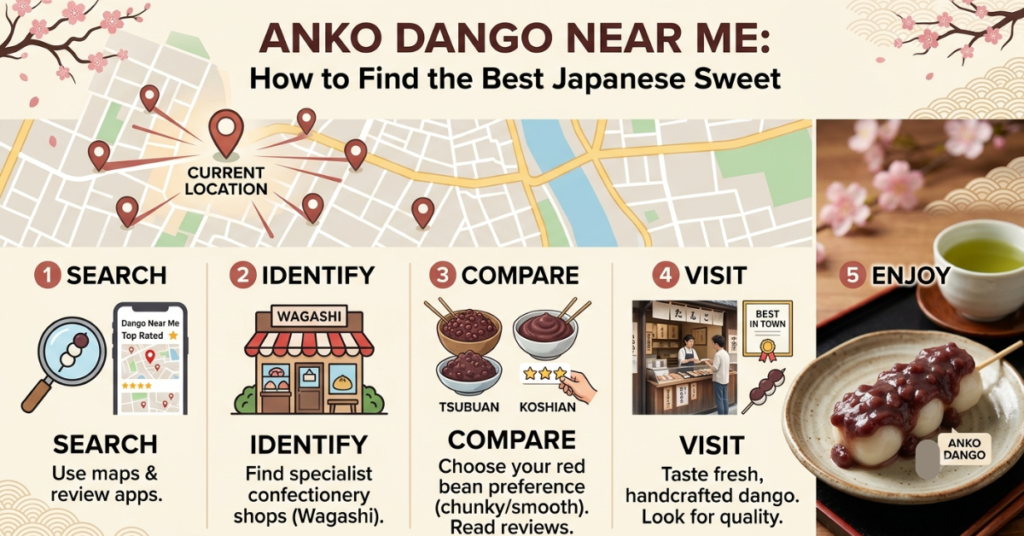

Have you ever searched for anko dango near me only to find sushi restaurants instead of authentic Japanese dessert shops? You’re not alone. While Japanese cuisine has become popular worldwide, traditional sweets like anko dango can still be surprisingly difficult to find.
If you’re craving soft, chewy rice dumplings topped with sweet red bean paste, this guide will help you discover where to find them, what to look for, and how to enjoy this classic Japanese dessert. Whether you’re visiting a Japanese market, exploring an Asian grocery store, or looking for authentic dessert cafés, you’ll learn everything you need to know before your next search.
What Is Anko Dango?
Anko dango is a traditional Japanese sweet made from chewy rice flour dumplings (called dango) served with anko, a sweet paste made from red azuki beans.
Unlike mochi, which has a softer and stretchier texture, dango is firmer, chewier, and typically served on a bamboo skewer with three to five dumplings.
The combination creates a dessert that balances:
- Mild sweetness
- Chewy texture
- Rich bean flavor
- Traditional Japanese taste
For many Japanese families, anko dango is more than just dessert—it’s a seasonal favorite enjoyed during festivals, tea ceremonies, and special occasions.
Why Are So Many People Searching for “Anko Dango Near Me”?
Interest in Japanese desserts has grown significantly in recent years. People who discover dango through anime, Japanese travel videos, or social media often want to taste the authentic version themselves.
Common reasons people search include:
- Trying authentic Japanese sweets
- Looking for desserts beyond sushi
- Finding Japanese bakeries nearby
- Exploring Asian dessert cafés
- Visiting Japanese supermarkets
Many cities now have specialty stores offering traditional wagashi (Japanese confectionery), making anko dango easier to find than ever before.
Where Can You Find Anko Dango Near You?
Depending on where you live, several places may carry fresh or frozen anko dango.
Japanese Bakeries
Authentic Japanese bakeries often prepare fresh dango daily.
They may also offer:
- Mitarashi dango
- Matcha dango
- Sesame dango
- Sakura seasonal dango
Fresh bakery-made dango usually has the best texture.
Japanese Grocery Stores
Many Japanese supermarkets stock refrigerated or frozen dango.
Look in sections containing:
- Frozen desserts
- Traditional sweets
- Refrigerated wagashi
- Ready-to-eat snacks
Popular Japanese grocery chains often carry several varieties throughout the year.
Asian Supermarkets
Large Asian supermarkets frequently import Japanese desserts.
These stores may carry:
- Frozen anko dango
- Instant dango kits
- Sweet red bean paste
- Rice flour for homemade dango
Availability depends on the store’s Japanese product selection.
Japanese Dessert Cafés
Many Japanese cafés now specialize in traditional desserts.
Beside it, you might also find:
- Matcha parfaits
- Mochi
- Dorayaki
- Taiyaki
- Warabi mochi
These cafés often prepare desserts fresh to order.
Local Food Festivals
Japanese cultural festivals frequently feature authentic street food.
Seasonal events often include:
- Fresh grilled dango
- Traditional sweets
- Matcha desserts
- Festival snacks
These events are excellent opportunities to try freshly made dango.
What Does Anko Dango Taste Like?
If you’ve never tried it before, the flavor may surprise you.
The rice dumplings themselves are only mildly sweet.
Most of the sweetness comes from the anko topping, which has:
- A smooth texture
- Mild earthy flavor
- Gentle sweetness
- Creamy consistency
Unlike Western desserts, Japanese sweets are generally less sugary, allowing the natural ingredients to stand out.
Different Types of Dango You Might Find
Searching may also introduce you to several other delicious varieties.
Mitarashi Dango
Covered in a glossy soy sauce glaze with a sweet and savory flavor.
Matcha Dango
Made with green tea powder for a slightly bitter yet refreshing taste.
Sanshoku Dango
Three colorful dumplings—typically pink, white, and green—served together.
Goma Dango
Topped with sweet black sesame paste.
Kinako Dango
Coated in roasted soybean flour for a nutty flavor.
How to Choose the Best Anko Dango
Not every store offers the same quality.
Here are a few things to look for:
Freshness
Fresh dango should feel soft and chewy rather than dry or hard.
Texture
Good dango has a springy bite without being overly sticky.
Quality of the Anko
The red bean paste should be smooth, balanced, and not overly sweet.
Authentic Ingredients
Traditional recipes typically include:
- Rice flour
- Water
- Azuki beans
- Sugar
- Salt
Simple ingredients usually produce the most authentic flavor.
Tips for Finding Authentic Anko Dango
If your first search doesn’t produce results, try expanding your search using related phrases.
Useful searches include:
- Japanese bakery near me
- Japanese dessert near me
- Wagashi shop near me
- Japanese sweets nearby
- Asian supermarket with Japanese desserts
You can also call local Japanese grocery stores to ask if they carry fresh or frozen dango.
Can You Make Anko Dango at Home?
Absolutely.
If you can’t find, making it yourself is a fun alternative.
Basic ingredients include:
- Glutinous rice flour or dango flour
- Water
- Sweet red bean paste
- Bamboo skewers (optional)
Homemade versions allow you to adjust sweetness and experiment with toppings like matcha, sesame, or kinako.
Is Anko Dango Healthy?
Compared with many Western desserts, it is relatively simple.
Potential benefits include:
- Low in saturated fat
- Made with plant-based ingredients
- Moderate portion size
- Contains fiber from red beans
However, since it contains sugar, it’s still best enjoyed as an occasional treat.
Common Mistakes When Buying Dango
Avoid these common issues:
- Buying expired refrigerated products
- Assuming all dango contains anko
- Overlooking frozen dessert sections
- Expecting mochi and dango to taste the same
- Ignoring seasonal availability
Reading product labels can help you choose the variety you’re looking for.
Key Takeaways
- Anko dango is a traditional Japanese dessert made with chewy rice dumplings and sweet red bean paste.
- Japanese bakeries usually offer the freshest options.
- Asian supermarkets often stock frozen versions.
- Japanese festivals are excellent places to try authentic dango.
- Homemade dango is surprisingly easy if local stores don’t carry it.
Frequently Asked Questions
Where can I find anko dango near me?
Look for Japanese bakeries, Japanese supermarkets, Asian grocery stores, dessert cafés, and local Japanese cultural festivals. Availability varies by location, but many larger cities now offer authentic options.
Is anko dango the same as mochi?
No. Although both are made from rice, dango has a firmer, chewier texture and is usually served on skewers, while mochi is softer and stretchier.
Can I buy frozen anko dango?
Yes. Many Japanese and Asian grocery stores sell frozen anko dango that can be thawed before serving. Frozen versions are a convenient alternative when fresh dango isn’t available.
What is anko made from?
Anko is made by cooking azuki beans with sugar until they become a smooth or chunky sweet paste. It is one of the most popular fillings used in traditional Japanese desserts.
Is anko dango vegan?
Many traditional recipes are naturally vegan because they contain rice flour, water, sugar, and red beans. However, always check ingredient labels, as some packaged products may contain additional ingredients.
Why is anko dango becoming more popular?
Growing interest in Japanese food, travel, anime, and traditional desserts has introduced more people to dango. Many dessert lovers now seek authentic Japanese sweets beyond sushi and ramen.
Conclusion
Searching is the first step toward discovering one of Japan’s most beloved traditional desserts. Whether you find it at a Japanese bakery, an Asian supermarket, or a local cultural festival, authentic anko dango offers a unique combination of chewy rice dumplings and delicately sweet red bean paste that’s unlike any other dessert.
If you can’t find it nearby, don’t let that stop you—frozen options and homemade recipes make it possible to enjoy this classic treat almost anywhere. Explore local Japanese food spots, try different dango varieties, and experience a dessert that has delighted people in Japan for centuries.