
Technology is changing the way people work, communicate, and build careers. As businesses become increasingly dependent on digital systems, skilled IT professionals are more valuable than ever. However, getting started in the technology industry can feel confusing, especially when there are so many certifications, courses, and career options to consider. This is where the droven.io IT certification guide becomes an interesting topic for anyone looking to understand technology education and professional development.
IT certifications can help learners develop practical knowledge, demonstrate their abilities, and prepare for different technology-related roles. Whether someone is interested in cybersecurity, cloud computing, networking, or software development, choosing the right learning path is an important first step.
In this guide, we will explore what Droven.io is, how technology learning resources can support certification preparation, which IT certifications are worth considering, and how beginners can build a strong foundation for a future in technology.
What Is Droven.io?
Droven.io is an online technology-focused editorial platform that publishes information about artificial intelligence, digital transformation, emerging technologies, and related subjects. Its content aims to make complicated technology topics easier to understand for students, professionals, business owners, and general readers.
Rather than assuming that every visitor has a technical background, the platform presents technology-related information in an accessible format. This can be helpful for people who want to explore new subjects before investing time or money in professional training.
Some of the broader technology areas associated with the platform include:
- Artificial intelligence and machine learning
- Automation and digital transformation
- Information technology and computing
- Cloud technology and digital infrastructure
- Cybersecurity and online safety
- Software and emerging technology trends
Is Droven.io an Official IT Certification Provider?
This is an important distinction for anyone searching for the droven.io IT certification guide.
Droven.io presents itself as a technology information and editorial website. Its online presence does not establish that it is an accredited certification authority or an organization that independently awards professional IT credentials.
In other words, reading technology guides and learning about certification options should not be confused with completing an accredited course or passing an official certification examination.
For an industry-recognized credential, candidates should register directly with the relevant certification organization, such as CompTIA, Microsoft, Cisco, AWS, or Google Cloud.
This distinction helps learners avoid confusion and choose qualifications that employers can independently verify.
Why Are IT Certifications Important?
An IT certification is a professional credential that demonstrates knowledge or skills in a particular technology area. Depending on the program, candidates may need to complete training, pass an examination, demonstrate practical abilities, or meet experience requirements.
Certifications can be particularly useful for people entering the technology industry because they provide a structured way to learn important concepts.
Here are some reasons why professionals pursue IT certifications.
1. Demonstrate Technical Knowledge
A recognized certification provides evidence that a candidate has studied a specific technology or professional skill area. It can make technical abilities easier for employers to assess during recruitment.
2. Improve Career Opportunities
Some employers prefer candidates with relevant certifications, particularly for technical positions involving networking, cloud infrastructure, cybersecurity, and IT support.
Although a certificate does not guarantee employment, it can strengthen a candidate’s professional profile.
3. Build Practical Skills
Many certification programs include hands-on exercises, technical labs, and real-world scenarios. These activities help learners understand how technology works beyond basic definitions.
4. Support Career Advancement
Experienced professionals can use advanced certifications to demonstrate specialized knowledge and prepare for responsibilities involving system administration, security management, cloud architecture, and technical leadership.
5. Encourage Continuous Learning
Technology changes constantly. Certifications encourage professionals to update their knowledge and remain familiar with current tools, systems, and industry practices.
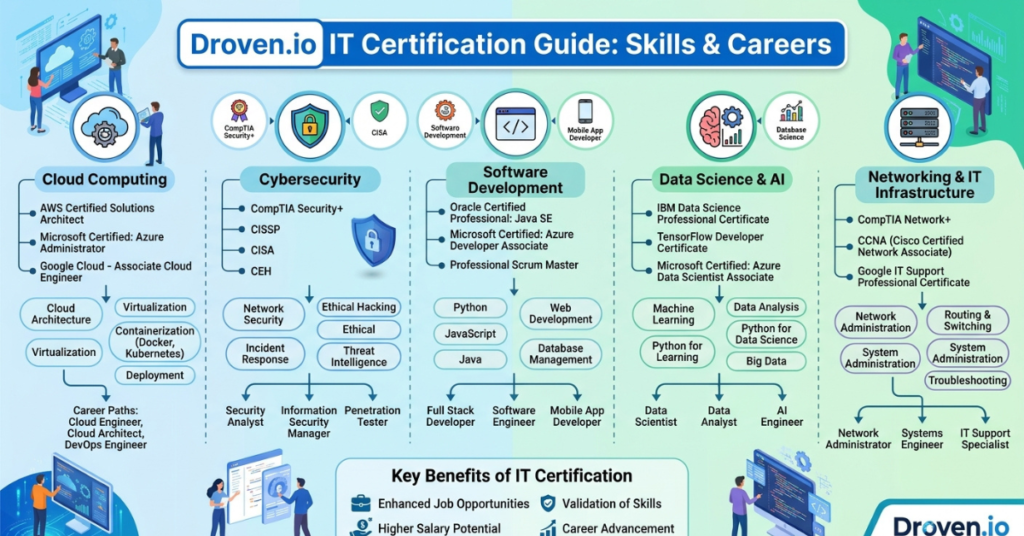
Popular IT Certifications Worth Exploring
Choosing a certification depends on your experience, interests, and career goals. There is no single qualification that suits everyone.
The following certifications are useful starting points for exploring different areas of information technology.
1. CompTIA A+ Certification
CompTIA A+ is a well-known entry-level certification for people interested in IT support and technical troubleshooting.
It introduces important concepts related to computer hardware, operating systems, networking, security, and troubleshooting.
Best suited for:
- IT support beginners
- Help desk professionals
- Computer technicians
- Individuals interested in technical support careers
It can provide a foundation for understanding how computers and everyday IT systems operate.
2. CompTIA Network+ Certification
Networking is essential for businesses that rely on connected devices, servers, and communication systems.
CompTIA Network+ covers networking concepts, infrastructure, network troubleshooting, security, and connectivity.
Best suited for:
- Aspiring network technicians
- IT support professionals
- Network administrators
- Beginners interested in computer networking
It is a useful option for learners who want to understand how digital devices communicate across networks.
3. CompTIA Security+ Certification
Cybersecurity has become a major priority as organizations face increasing risks from data breaches, malware, phishing, and other digital threats.
CompTIA Security+ introduces essential security concepts, risk management, threat identification, and defensive practices.
Best suited for:
- Aspiring cybersecurity professionals
- Security operations analysts
- IT administrators
- Professionals interested in information security
It is important to review the current exam objectives and recommended experience before registering.
4. AWS Certified Cloud Practitioner
Cloud computing allows businesses to access computing resources, databases, storage, and applications through cloud-based infrastructure.
AWS Certified Cloud Practitioner is an introductory certification that covers the fundamentals of Amazon Web Services, including cloud concepts, security, services, and pricing.
Best suited for:
- Cloud computing beginners
- Students exploring cloud careers
- Business professionals working with cloud services
- Individuals considering advanced AWS certifications
It offers a starting point for understanding the AWS cloud ecosystem.
5. Microsoft Azure Fundamentals (AZ-900)
Microsoft Azure is a widely used cloud computing platform. Its Azure Fundamentals certification introduces cloud concepts and the basic services available through Microsoft Azure.
The exam covers areas such as:
- Cloud computing concepts
- Azure architecture and services
- Cloud security and governance
- Azure pricing and support
Best suited for: Beginners, students, IT professionals, and business users who want to understand Microsoft’s cloud platform.
6. Google Cloud Associate and Professional Certifications
Google Cloud offers certification pathways for individuals interested in cloud technology, infrastructure, data engineering, and machine learning.
Its credentials range from associate-level qualifications to more advanced professional certifications.
These programs can help learners develop knowledge of cloud environments and prepare for specialized technical responsibilities.
Best suited for:
- Cloud engineers
- Developers
- Data professionals
- IT infrastructure specialists
Candidates should check the official Google Cloud certification catalog to identify the appropriate level and prerequisites.
How to Choose the Right IT Certification
With so many options available, selecting a certification can be challenging. The best approach is to identify your interests and compare them with the skills required in your preferred career.
Consider the following factors before making a decision.
Identify Your Career Interests
Start by deciding which technology area interests you most.
For example:
- Interested in protecting systems? Explore cybersecurity.
- Enjoy solving computer problems? Consider IT support.
- Interested in servers and digital infrastructure? Explore cloud computing.
- Like connecting systems and devices? Consider networking.
- Enjoy building applications? Explore software development.
Having a clear direction makes it easier to select relevant courses and certifications.
Evaluate Your Current Skill Level
Some certifications are designed for beginners, while others expect candidates to have professional experience.
Before registering, review the official exam objectives, recommended knowledge, and prerequisites.
You should also consider whether you understand basic computer concepts and technical terminology.
Compare Certification Costs
Certification expenses can vary depending on the provider, examination, location, and training method.
Your budget should account for more than the exam fee. Consider additional expenses such as:
- Online training programs
- Practice examinations
- Study materials
- Technical labs
- Examination retakes
Always confirm current prices through the official certification provider.
Check Industry Recognition
Not every online certificate carries the same professional value.
Before paying for a course, check whether the credential is issued by a recognized organization and whether employers in your target industry request it.
An official certification with clearly defined examination requirements is generally more meaningful than an unverified completion certificate.
How to Prepare for an IT Certification Exam
Passing an IT certification exam requires more than memorizing technical definitions. A balanced study plan should combine theoretical understanding, practical exercises, and regular revision.
Here is a simple approach that beginners can follow.
Step 1: Choose One Certification
Avoid preparing for several unrelated certifications at the same time.
Select one qualification based on your interests and current knowledge. Read its official exam objectives to understand what you need to learn.
Step 2: Find Reliable Study Resources
Use a combination of learning materials, including:
- Official certification documentation
- Online training courses
- Video tutorials
- Technology blogs and educational guides
- Practice questions
- Technical documentation
Resources such as Droven.io can help introduce technology concepts, while official provider materials should remain your primary reference for exam preparation.
Step 3: Create a Study Schedule
A consistent routine is usually more effective than studying everything at once.
For example, you could organize your weekly preparation like this:
| Day | Study Activity |
| Monday | Learn new technical concepts |
| Tuesday | Read documentation and take notes |
| Wednesday | Practice technical exercises |
| Thursday | Review difficult topics |
| Friday | Complete practice questions |
| Saturday | Work on a small practical project |
| Sunday | Revise and assess progress |
Adjust the schedule according to your available time and exam date.
Step 4: Practice With Real-World Scenarios
Practical learning is especially important in technology.
Depending on your chosen subject, you could:
- Install and troubleshoot operating systems.
- Create a basic virtual network.
- Explore cloud computing environments.
- Practice identifying common cybersecurity threats.
- Build a simple application.
- Work with databases and programming tools.
These activities help connect theoretical knowledge with real technical situations.
Step 5: Review Your Progress
Take practice examinations to identify areas that need improvement.
Instead of focusing only on your score, understand why particular answers are correct or incorrect. This will help you develop stronger technical knowledge before the actual examination.
IT Career Paths After Certification
An IT certification can support your career development, but your opportunities will depend on your technical skills, experience, practical projects, and the requirements of individual employers.
Here are several career paths worth exploring.
IT Support Specialist
IT support specialists help users resolve technical problems involving computers, applications, networks, and operating systems.
Common responsibilities include troubleshooting hardware, installing software, managing user accounts, and maintaining computer systems.
CompTIA A+ can be a relevant starting qualification for this career direction.
Network Administrator
Network administrators maintain an organization’s computer networks and ensure that connected systems operate reliably.
Their responsibilities may include configuring network devices, monitoring performance, managing access, and resolving connectivity issues.
Networking knowledge and relevant professional certifications can help candidates prepare for these roles.
Cybersecurity Analyst
Cybersecurity analysts help organizations protect their systems, networks, and sensitive information.
Their work may involve monitoring security alerts, investigating suspicious activity, assessing vulnerabilities, and supporting incident response.
Security-focused certifications can help establish the technical foundation required for this field.
Cloud Engineer
Cloud engineers work with cloud infrastructure, deployment environments, storage systems, and computing services.
They help businesses build, manage, and maintain cloud-based solutions.
Knowledge of AWS, Microsoft Azure, or Google Cloud can be valuable when preparing for this career path.
Software Developer
Software developers design, build, test, and maintain applications and digital products.
This career typically requires programming knowledge, problem-solving abilities, and familiarity with software development tools.
Although general IT certifications may provide useful background knowledge, practical coding experience and a strong project portfolio are particularly important.
Common Mistakes to Avoid When Choosing IT Certifications
Certification preparation can become expensive and time-consuming when learners do not have a clear plan.
Avoid these common mistakes:
Choosing a certification without a career goal: A popular qualification is not automatically the right one for your interests.
Ignoring practical experience: Understanding concepts is important, but employers also value the ability to apply technical knowledge.
Relying entirely on practice questions: Memorizing answers without understanding the underlying concepts can limit your ability to solve real problems.
Overlooking exam requirements: Always check the official syllabus, examination format, and prerequisites.
Trusting unverified certification websites: Be careful with websites that promise guaranteed jobs, instant credentials, or professional certificates without a legitimate examination process.
Collecting too many certificates: A smaller number of relevant qualifications supported by practical experience can be more useful than a long list of unrelated certificates.
How Droven.io Can Support Technology Learning
The droven.io IT certification guide topic is relevant to people who want to explore technology education and understand different professional development opportunities.
An informational technology platform can support the learning process in several ways.
Understand New Technology Concepts
Beginners can use accessible educational articles to become familiar with subjects such as artificial intelligence, automation, cloud computing, and digital transformation.
Explore Different Career Areas
Reading about different technology fields can help learners identify which skills match their interests.
For example, someone exploring cybersecurity may discover an interest in network security, while another reader may prefer cloud infrastructure or software development.
Build Background Knowledge
Before enrolling in a paid certification program, learners can explore introductory articles to understand basic terminology and identify the subjects they need to study further.
Make Better Learning Decisions
Technology guides can help readers compare different fields, understand common applications, and prepare better questions before choosing a course or certification.
However, readers should always verify examination details, certification validity, and professional requirements through the relevant official organizations.
The Future of IT Certifications and Technology Skills
The technology industry continues to evolve, creating new opportunities for people with relevant technical knowledge.
Artificial intelligence, automation, cloud computing, and cybersecurity are influencing how organizations operate. As a result, professionals increasingly need to develop both foundational IT knowledge and specialized skills.
Several areas are particularly worth watching:
- Artificial intelligence: Understanding AI applications, machine learning fundamentals, and responsible AI use.
- Cloud computing: Learning cloud infrastructure, deployment, storage, and security.
- Cybersecurity: Developing knowledge of threat detection, risk management, and system protection.
- Data analytics: Understanding how organizations collect, analyze, and interpret information.
- Automation: Learning how software and automated workflows improve business processes.
- DevOps: Exploring collaboration between software development and IT operations.
Certifications can provide structured learning opportunities in these areas. However, professionals should also develop problem-solving abilities, communication skills, and hands-on experience to remain adaptable as technology changes.
Official IT Certification Resources
For accurate examination information, study materials, and registration details, use the official websites of the certification providers:
- CompTIA Certifications
- AWS Certification
- Microsoft Learn Certifications
- Google Cloud Certifications
- Cisco Certifications
These resources provide information about available credentials, exam objectives, preparation materials, and certification requirements.
Frequently Asked Questions (FAQs)
1. What is the Droven.io IT certification guide?
The droven.io IT certification guide is a search topic related to technology education, professional certifications, and IT career development. Droven.io is a technology-focused informational platform, not a confirmed official certification-awarding organization.
2. Does Droven.io offer official IT certifications?
Droven.io’s website presents it as an editorial technology platform. There is no verified evidence that it independently issues accredited IT certifications. For professional credentials, consider established providers such as CompTIA, Microsoft, AWS, and Google Cloud.
3. Which IT certification is best for beginners?
CompTIA A+, AWS Certified Cloud Practitioner, and Microsoft Azure Fundamentals are worth exploring. The right option depends on whether you are interested in IT support, cloud computing, or another technology career.
4. Are IT certifications worth getting?
Yes, IT certifications can help demonstrate technical knowledge, strengthen a resume, and support professional development. However, their value depends on industry recognition, practical skills, and employer requirements.
5. Can I get an IT certification without a degree?
Yes. Many professional certification programs do not require a university degree. Some have recommended experience or prerequisite knowledge, so candidates should check the official requirements before registering.
6. How long does it take to prepare for an IT certification?
Preparation time varies depending on the certification, previous experience, and study schedule. An introductory certification may take several weeks or months of preparation, while advanced qualifications can require significantly more time.
7. Which IT certifications are useful for cybersecurity?
CompTIA Security+ is a popular starting point for cybersecurity learners. Other options include specialized credentials from Cisco, Microsoft, and other recognized security organizations.
8. Do IT certifications guarantee a job?
No. A certification can strengthen your professional profile, but employment also depends on practical experience, technical abilities, communication skills, interview performance, and market demand.
9. Are free IT certification courses available online?
Yes. Several organizations provide free learning materials, introductory courses, and training resources. However, free training does not always include a free professional certification examination.
10. How can I verify whether an IT certification is legitimate?
Visit the official certification provider’s website and check the credential’s name, examination requirements, registration process, and verification options. Avoid relying on third-party claims without confirmation.
Conclusion
Building a successful technology career starts with understanding the skills employers need and choosing the right learning direction. The droven.io IT certification guide provides an interesting starting point for exploring technology education, certification options, and professional development.
Although Droven.io should be viewed as an informational technology platform rather than an official certification provider, educational resources can help learners understand unfamiliar subjects and explore different career opportunities.
For recognized professional credentials, consider certifications from CompTIA, AWS, Microsoft, Google Cloud, and other established organizations. Combine structured learning with practical projects, technical experience, and continuous skill development.
The most important thing is to choose a learning path that matches your goals. Start with the fundamentals, build your technical knowledge gradually, and take the next step toward a rewarding career in information technology.